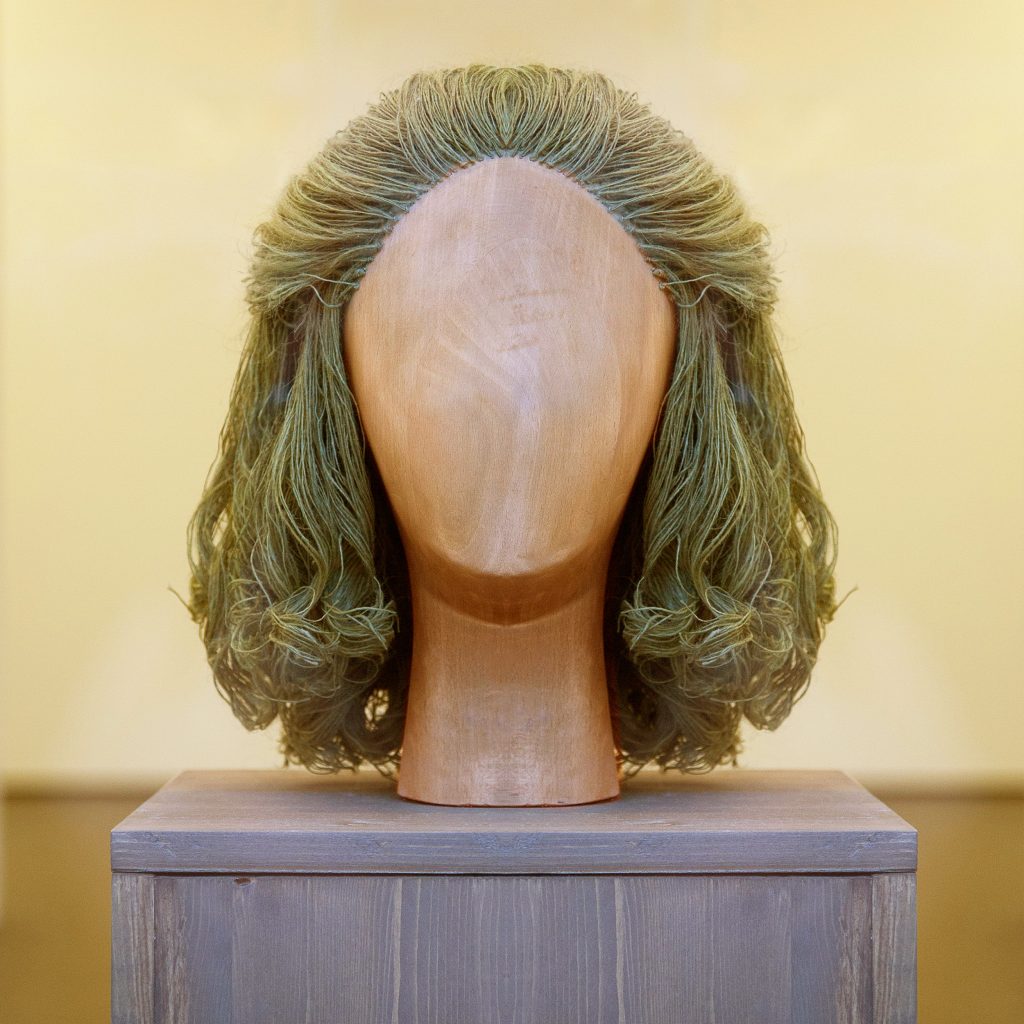
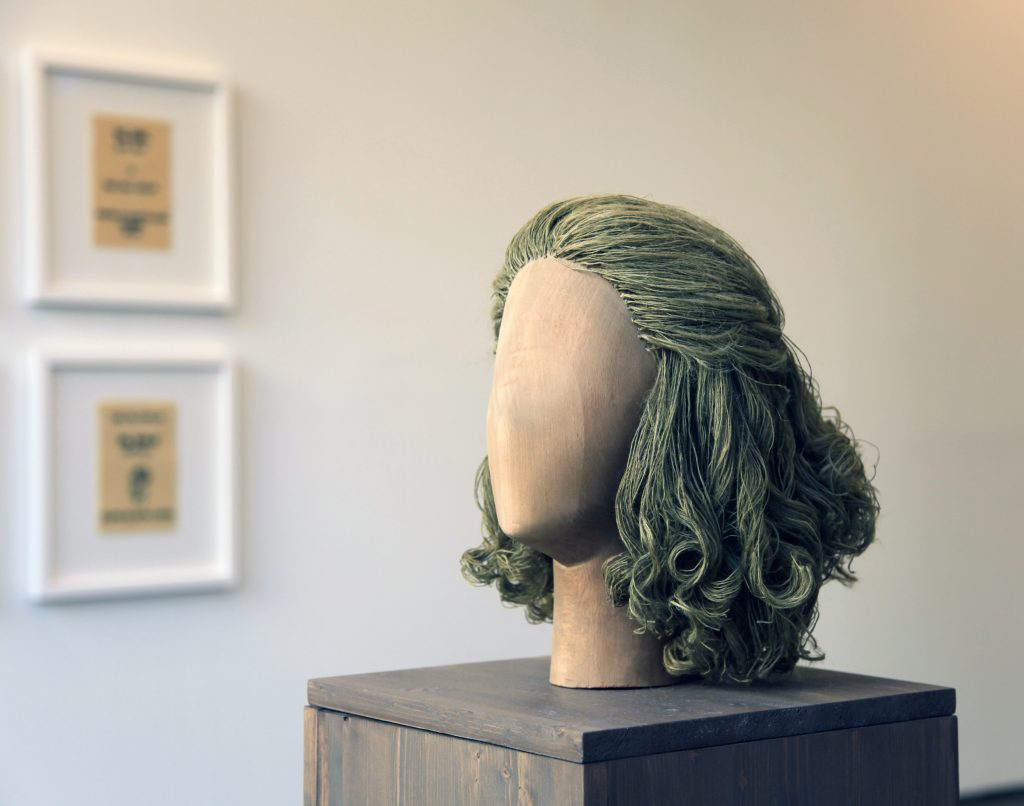
The sculpture is a portrait of Emilia, a character in Pier Paolo Pasolini’s film Teorema, who turns into a saint and refuses to eat anything but nettle.

Pasolini’s film Teorema (1968) tells the story about a mysterious stranger, who moves temporarily into a bourgeois family. One by one, the family members surrender to him, also their servant Emilia. After the stranger left, the mother starts to have sex with students, father gives his factory to the workers, the daughter falls into a catatonic coma, the son becomes an artist. Emilia becomes a saint.
Emilia moves to a small village, where a new modern suburb is built next to it. She sits on a bench by to the wall, heals sick children and levitates. She eats only nettles and her hair and eyebrows changes to green. In the end, she buries herself alive to guarantee better future for the community.
Emilia is a typical pasolinian character, who lives in the outskirts of the society. When the character becomes useful for the society s/he dies in a either voluntary or violent way. The Emilia statue is a tribute to the auto-sacrifice on behalf of the community and all the labourers who make altruistic work and never get recognition.
–
–
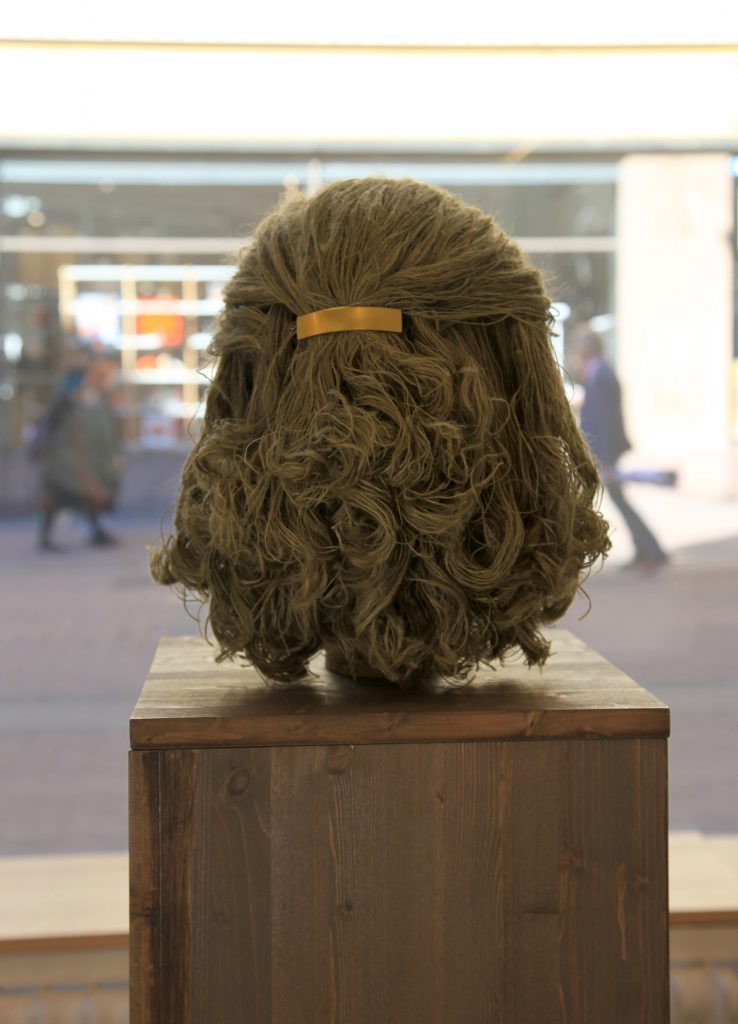
In Pasolini’s film Theorem, Emilia follows the construction of a new residential area in Rome. In the Konstmuseet i Norr exhibition, he looks at the new city of Kiruna being built before his eyes.


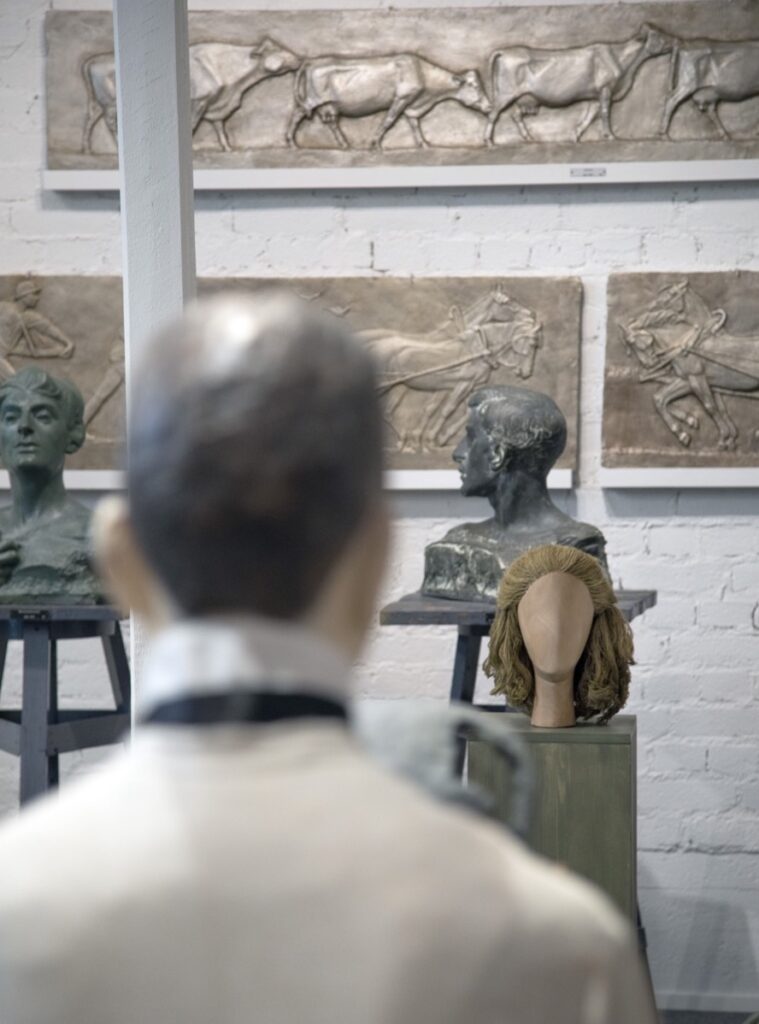
Emilia was also on display at the Emil Cedercreutz Museum’s Sensitiva exhibition, where the sculpture was placed in the studio of the sculptor Emil Cedercreutz, amongst his own sculptures. Emilia is positioned so that she is looking at a wax figure of Emil, with Emil Cedercreutz’s sculptures Gynandri (1904) and Sicilian Goat Herder (1905) in the background.