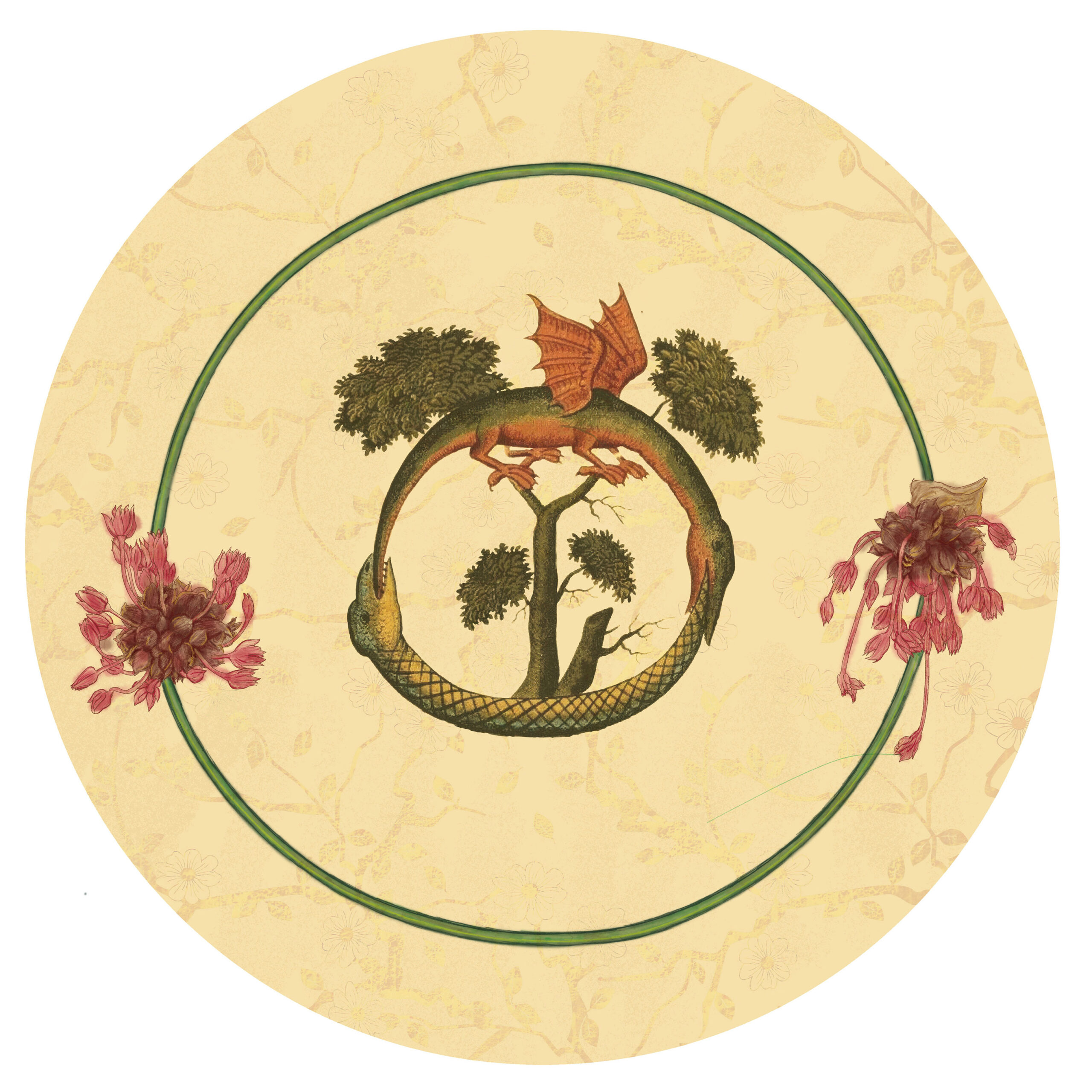
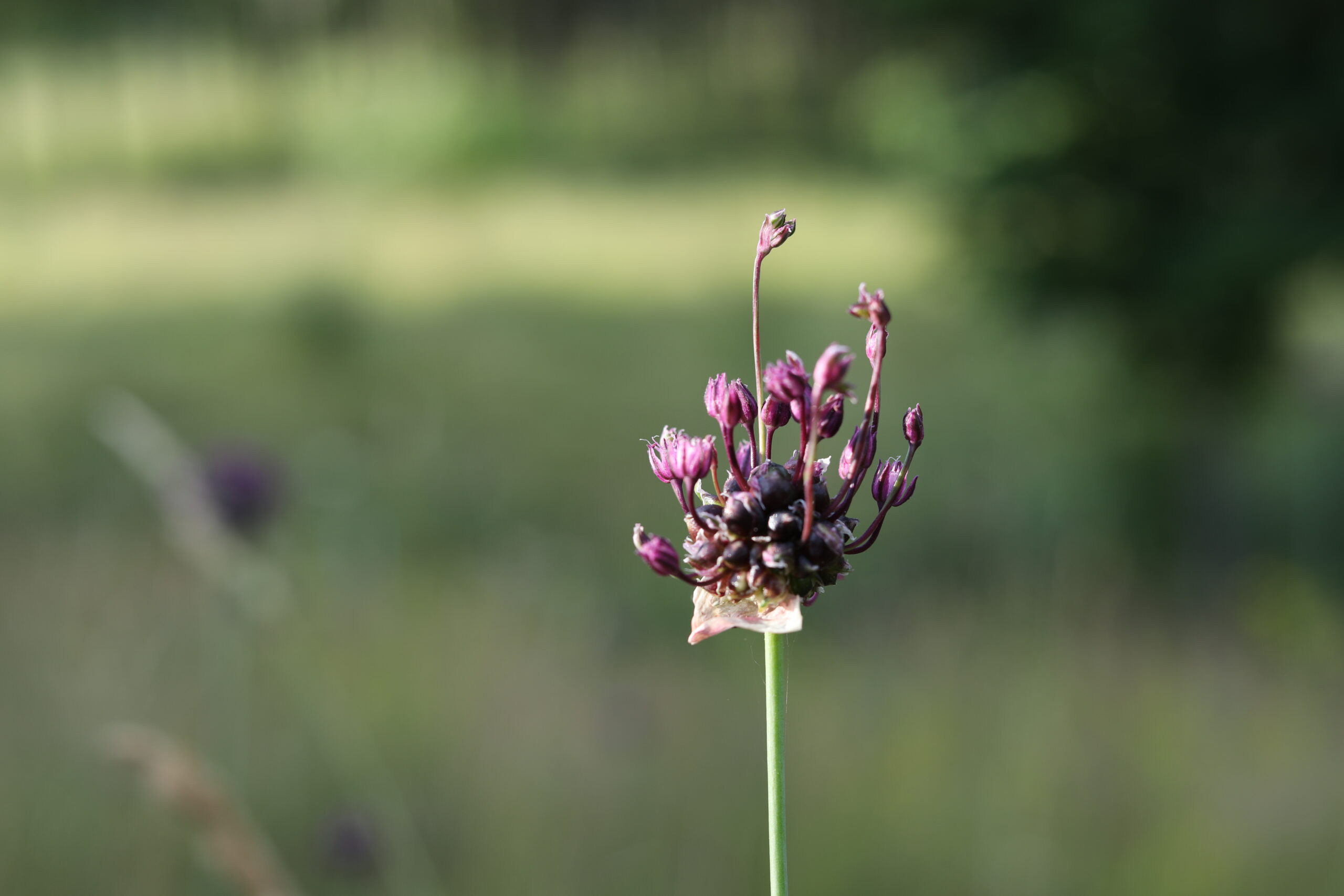
Sand leek (Allium scorodoprasum) grows on the island of Seili; its Finnish name is ‘snake’s onion’. In the wind, its stems bend into a half-circle, forming a swaying meadow. The dragons, for their part, form an ancient variation on the ouroboros – a snake biting its own tail.
Sand leek is known at least within the French cultural sphere as rocambole, and it has a long history of being used like garlic. It is mentioned in an old Finnish manuscript as an excellent seasoning for sauces and game. It was later forgotten, even though it apparently arrived in Finland too as a cultivated plant for the kitchen and also perhaps to help sailors stave off scurvy. Its habitat is a good reflection of ancient trade routes: on one hand it grows along the eastern road used by sailors, on the Åland Islands and along the south-west coast of the mainland, and on the other hand on the north-east of the archipelago along the old fur-trading road. Places that it has been found that were unsuitable for trade are apparently all left over from old herb gardens.
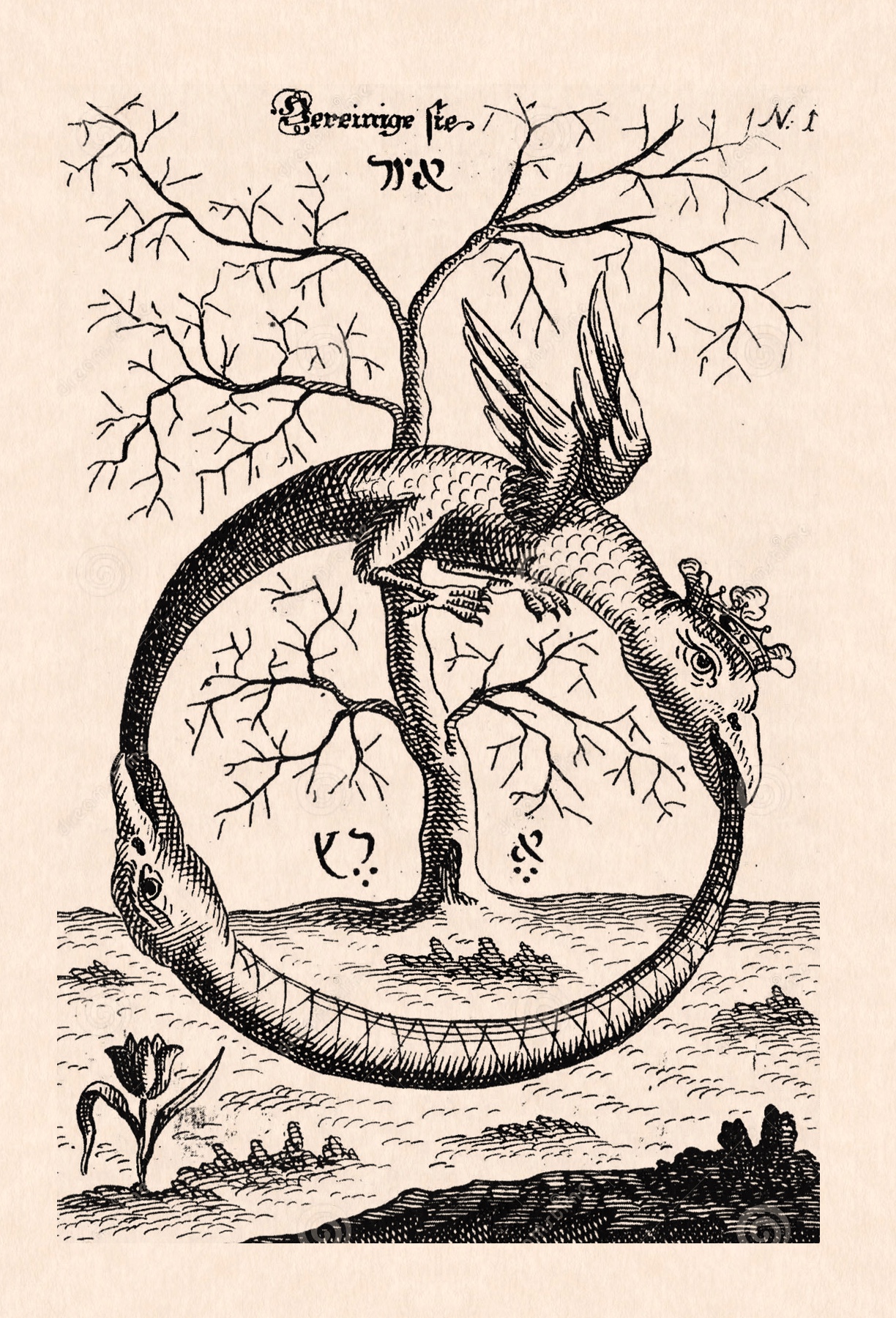
In this illustration from an 18th century alchemical manuscript, the serpent and dragon form a circle. In alchemy, the dragon symbolizes primal power, transformation, and the hidden forces of nature. It often represents the raw, untamed material that must be purified and transformed through the alchemical process. The dragon can also embody the union of opposites and destruction preceding renewal. In many alchemical illustrations, the dragon signifies both the challenge and the potential for profound inner and outer transformation.